Introduction: First Steps Toward Conservation Based on Local Wisdom
YOTA Adiwidya Center recently conducted a study visit to one of Indonesia's most phenomenal cultural sites, Gunung Padang Site, located in Karyamukti Village, Campaka District, Cianjur Regency, West Java.
This visit was part of YOTA Adiwidya Center's exploration and initial assessment program aimed at identifying potential collaboration and real contributions in the fields of community empowerment, cultural preservation, and the strengthening of sustainable local values.
For YOTA Adiwidya Center, Gunung Padang Site is not just a tourist destination. This place is a living learning space that holds a wealth of history, spirituality, ecology, and local wisdom that remains preserved to this day.
The Journey to the Largest Megalithic Site in Southeast Asia
The YOTA Adiwidya Center team departed from Bandung to Cianjur by land, a journey that took several hours. Although tiring, the trip was well worth the natural scenery along the way: stretches of green tea plantations, small flowing rivers, and small waterfalls hidden behind the trees.
Upon arriving at the Gunung Padang area, the team was greeted by cool and fresh mountain air. A thin mist still covered the area as rain had just subsided before the team's arrival. A magical and peaceful atmosphere was immediately felt, as if nature was welcoming the YOTA Adiwidya Center team to learn and reflect.
Geographically, Gunung Padang Site is located at an altitude of 885 meters above sea level. The location is surrounded by lush hills and mountains, creating a perfect harmony between cultural heritage and natural beauty.
Exploring the Five Terraced Levels Full of Mystery
During their time at the site, the YOTA Adiwidya Center team gained much knowledge and inspiration. One of the most fascinating aspects was the site's structure, consisting of five terraced levels, complete with various unique stones rich in symbolic and philosophical meaning.
The team had the opportunity to climb quite steep stairs—approximately 370 steps with an incline reaching 50 degrees at some points. Each step felt like tracing a corridor of time toward an advanced civilization of the past.
At the site, the team discovered several stones with unique characteristics, including:
- Gamelan stone – A stone that can be struck to produce a sound resembling a gamelan. It is believed that this stone was used in certain rituals in the past.
- Kanuragan stone – A stone believed to possess special spiritual energy.
- Kujang stone – A stone with a carving resembling the traditional Sundanese weapon, the kujang. This carving symbolizes power, protection, and local wisdom.
- Maung stone – A stone believed to have the footprint of a tiger (maung in Sundanese), which holds symbolic meaning in the beliefs of the local community.
Each of these elements reflects the deep symbolic richness and philosophy of the people who lived and worshipped in this area thousands of years ago.
The Harmony of Ecology and Culture That Remains Preserved
From an ecological perspective, Gunung Padang Site offers invaluable lessons. The surrounding environment remains lush and natural. Dense trees grow around the terraced levels of the site. Birds chirp to greet the morning. Mountain winds blow gently, bringing coolness.
The YOTA Adiwidya Center team noted that this area demonstrates how harmony between nature and culture can be well-preserved if managed wisely. The ancestors who built this site never separated humans from nature. They built with respect for the land's contours, wind directions, natural cycles, and the spiritual values they believed in.
This is a highly relevant ecological lesson for today's young generation—that development and preservation are not opposing forces but two sides of the same coin.
Meeting the Site Guardian: A Keeper of Oral Tradition
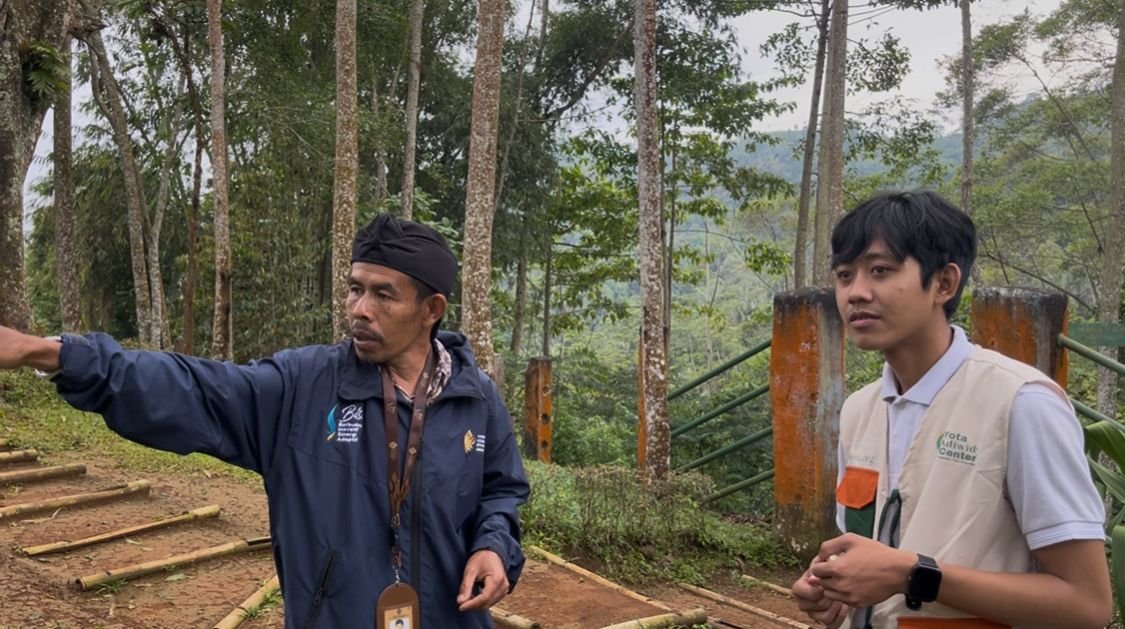
The YOTA Adiwidya Center team also had the opportunity to have a direct dialogue with the site guardian (juru kunci) of Gunung Padang. He patiently explained the history, myths, traditions, and spiritual values that have been passed down through generations in the local community.
From this interaction, the team understood that the spiritual, cultural, and ecological aspects of this area are aligned and mutually reinforcing. The site guardian explained that Gunung Padang is not merely a pile of stones. For him and the local community, this place is:
- A place to pray and meditate
- A place to honor ancestors
- A place to perform certain rituals at times considered sacred
- A space for reflection and seeking inner peace
YOTA Adiwidya Center recognizes that the site guardians and local communities are the true frontliners of preservation. They are not merely tour guides but inheritors of oral traditions who maintain noble values from generation to generation.
This became an important lesson for YOTA Adiwidya Center that preservation is not only physical (maintaining stones and buildings) but also involves values, collective awareness, and empowerment of the communities living around the site.
Initial Assessment: Identifying Collaboration Potential for YOTA Adiwidya Center
In addition to exploration and documentation, the YOTA Adiwidya Center team also conducted an initial assessment of the social conditions of the community around the Gunung Padang Site.
The objectives of this assessment were:
- To understand the real conditions of the local community
- To identify existing potentials and challenges
- To see opportunities for collaboration that YOTA Adiwidya Center can develop in the future
- To formulate empowerment strategies based on community needs, not merely the institution's desires
The team spoke with several local residents, asking about their daily lives, their hopes for the site, and the challenges they face in preserving and managing the Gunung Padang area.
YOTA Adiwidya Center is committed to not merely coming, learning, and leaving. We aim to be a partner that makes real contributions, particularly in the context of empowerment and strengthening local potential in West Java.
Sharing Happiness with Local Children
Interaction with the community, especially children, was also an inseparable part of YOTA Adiwidya Center's study visit. The team shared simple joys by distributing snacks and engaging in direct conversations with them.
The children around Gunung Padang welcomed the team warmly and with great curiosity. Their eyes sparkled. Some asked where the team came from, some just smiled shyly, while others immediately played and chatted about their daily lives.
In one moment, the YOTA Adiwidya Center team also introduced simple technology, such as a drone, to the local children. As soon as the drone flew into the air, all the children ran toward it with incredible enthusiasm.
"Kak, what's that? It can fly!" one child exclaimed with pure joy.
The team used this opportunity to share stories and motivate the children to stay enthusiastic about learning, dare to dream, and believe that they can build their own region someday.
YOTA Adiwidya Center believes that local children are the next generation of site guardians. If they are not introduced to the history, culture, and noble values from an early age, sites like Gunung Padang will become mere "stone gardens without a soul" in the future. Early education is a long-term investment in preservation.
Reflection: Gunung Padang is a Living Classroom of Civilization
After exploring the entire site area, speaking with the site guardian, interacting with the community, and playing with local children, the YOTA Adiwidya Center team sat for a moment on one of the terraces to reflect.
From that height, the team could see far into the valley. The trees remained dense. Mist began to fall slowly. The cold wind brought coolness. The atmosphere was so quiet and peaceful.
In that silence, YOTA Adiwidya Center realized that Gunung Padang Site is not merely a pile of ancient stones. This place is:
- A stone library containing records of thousands of years of civilization
- A space for dialogue between the present and the past
- A living laboratory for studying ecology, architecture, spirituality, and culture
- A reminder that the ancestors of the Archipelago were already highly advanced in science and technology
This visit further strengthened YOTA Adiwidya Center's spirit to continue innovating and developing impactful programs for communities and cultural preservation.
Conclusion: More Than a Destination, a Learning Space to Make an Impact
The journey from Bandung to Cianjur, which took several hours, was well worth the experience and knowledge gained by the YOTA Adiwidya Center team.
This area not only offers natural beauty such as tea plantations, rivers, waterfalls, and lush mountains. More importantly, this area has a strong value center at Gunung Padang Site as a cultural heritage full of mystery, meaning, and local wisdom.
YOTA Adiwidya Center concludes that:
- Ecology – Gunung Padang Site teaches the importance of harmony between humans, culture, and nature.
- Cultural History – This site is tangible evidence that the civilization of the Archipelago was already highly advanced thousands of years ago.
- Spirituality – Gunung Padang is a sacred place still used for prayer, meditation, and honoring ancestors to this day.
- Human Resources – Local communities, especially the site guardians and children, are the frontliners of preservation who must continue to be supported and empowered.
For YOTA Adiwidya Center, places like Gunung Padang are not just destinations. They are learning spaces that inspire change rooted in local values and sustainability.
Closing: YOTA Adiwidya Center's Next Steps
This study visit is only the beginning. YOTA Adiwidya Center will continue to conduct exploration, assessment, and program development in various other cultural areas across Indonesia.
We invite young people, cultural activists, academics, and all parties who share the same spirit to collaborate with YOTA Adiwidya Center in preserving cultural heritage, empowering local communities, and building a future rooted in the wisdom of the Archipelago.
Because YOTA Adiwidya Center believes: Indonesia's future lies in the hands of the younger generation who know, love, and preserve their own culture.